Politics
Illinois Joins Other States in Suing US Postal Service in Fight Over Mail-In Voting
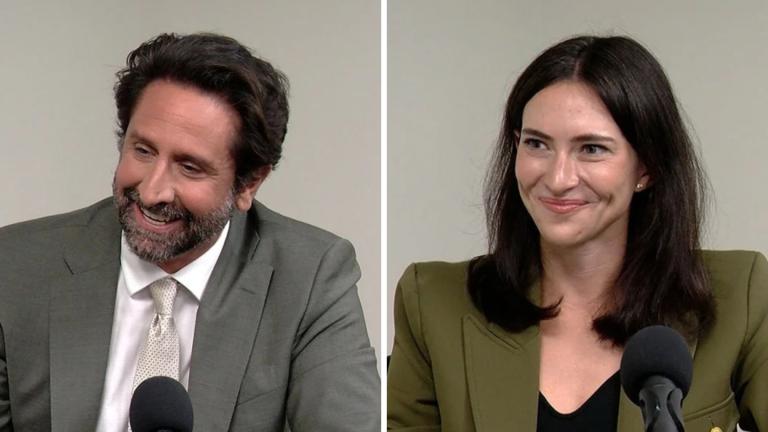
Video: Joining “Chicago Tonight” on Aug. 26, 2026, are Steven Schwinn, a law professor at the University of Illinois Chicago, and Monica Gordon, the Cook County clerk. (Produced by Andrew Montequin)
Illinois and two dozen other Democratic-led states have filed suit against the U.S. Postal Service, challenging a Trump administration order that seeks to limit mail-in voting ahead of this fall’s midterm elections.
Illinois Attorney General Kwame Raoul on Wednesday announced the lawsuit, arguing President Donald Trump’s executive order is unconstitutional and risks disenfranchising voters by preventing states from effectively administering their vote-by-mail programs.
“The right to vote is our most fundamental right, and it should not matter whether ballots are submitted early, sent by mail or cast on Election Day,” Raoul said in a statement. “Throughout my career, I have been committed to protecting voting rights, and I will continue to defend these rights from any and all attacks.”
The lawsuit comes on the same day a federal judge in Boston agreed to lift an order prohibiting the U.S. Postal Service from carrying out Trump’s order for November’s elections. U.S. District Judge Indira Talwani wrote that she was “compelled” to do so after the Supreme Court’s conservative majority ruled that a similar injunction she granted in a separate case was premature.
Talwani nevertheless said the executive order could unleash “chaos” and referred to it as “likely unconstitutional.”
Trump’s executive order, signed in March, calls on his administration to create lists of eligible voters and orders the U.S. Postal Service to deliver mail ballots only to people on those lists. New requirements released Friday would forbid the Postal Service from sending mail ballots from any state that does not comply with Trump’s order.
A majority of the Supreme Court justices ruled against the states in a related case this week, but did not say Trump’s order was legal, and it remains barred from taking effect.
Rather than saying that Trump’s order is legal, the Supreme Court said Monday it was too early for Democratic-run states to challenge it in June, when they convinced a federal judge in Boston to freeze the order for November’s election. That effectively restarts the legal fight over the order in an incredibly compressed timeline.
Raoul and the coalition of attorneys general from two dozen states argued in their lawsuit Trump’s order inflicts “significant, irreparable harm” on states by imposing burdensome mail voting requirements with the first mail-in ballots due to be sent out next week.
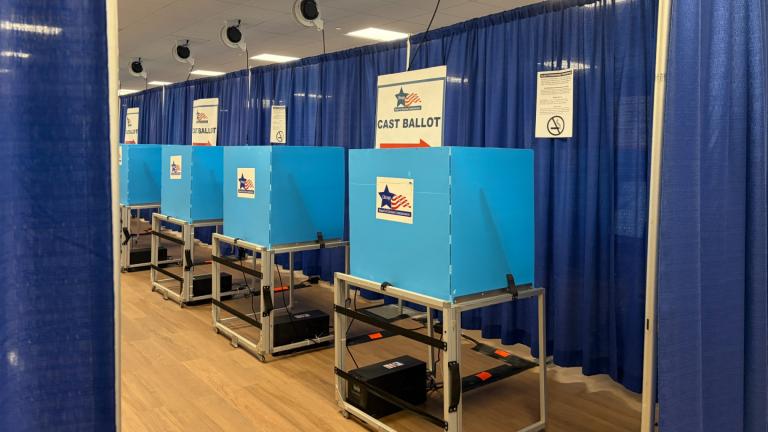
Illinois and Cook County leaders this week sought to reassure voters about the safety of mail-in voting, while also encouraging them to return their ballots as early as they can to ensure they’re properly counted.
In Illinois, mail-in ballots must be postmarked by Election Day and be received no less than two weeks after the election date.
Through their lawsuit, the attorneys general are seeking emergency relief while arguing the Trump administration is “trying to undermine our citizens’ access to voting.”
“The U.S. Constitution plainly gives states — not the executive branch — the power to administer elections,” Raoul said, “and I am committed to swiftly fighting against this blatantly unconstitutional rule. I will not let the president sow chaos into the upcoming general election.”
Why Now?
In the Supreme Court’s decision Monday, the court ruled that states had not yet suffered the kind of harm that would get their case into federal court. But as the midterm elections rapidly approach, states are saying that’s no longer the case.
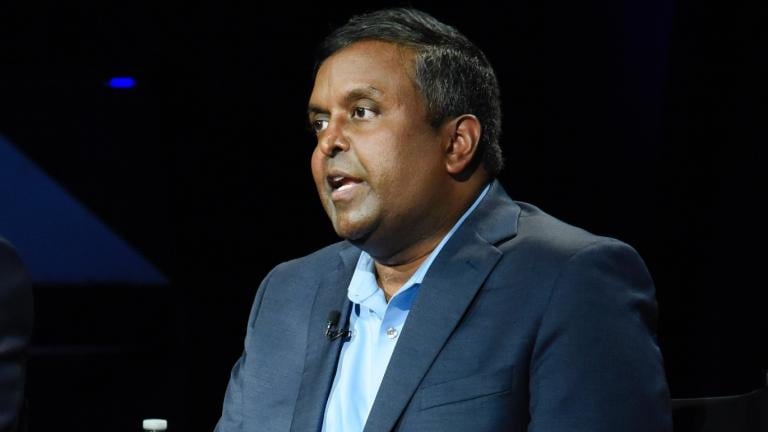
“Now, the United States Postal Service has actually implemented its regulations,” said Steven Schwinn, a law professor at the University of Illinois Chicago.
At the end of last week, USPS issued its regulations on what ballots should look like, and informed states of the requirement to send an eligible voter list.
“And the states now have sued, saying, ‘Now that the regulation is in place, we’ve suffered the kind of harm that would allow us to get into federal court, and we now have a ripe case with standing,’” Schwinn said.
According to Schwinn, the time crunch with these legal challenges stems from the timing of the executive order in March. The timeline from the executive order, through implementation this summer, leaves little time for local officials to prepare.
And when it comes to further court intervention, the Purcell Principle could come into play. That’s a longstanding guideline that federal courts shouldn’t weigh in on state election rules too close to an election, in order not to create confusion.
Cook County Clerk Monica Gordon said voters should still expect the available voting options, but election officials are preparing for a variety of contingencies.
And as the legal back-and-forth plays out, Gordon said it’s slowly feeding into confusions and rumors that could impact overall trust in elections.
“The biggest threat to our democracy is misinformation and disinformation,” Gordon said. “There’s a lot of confusion now. … Voting by mail is safe, it’s secure, it’s fair.”
Limited early voting begins in suburban Cook County at six sites on Oct. 7; expanded suburban early voting begins Oct. 19. Click here for a map of suburban Cook County early voting sites. Click here for more information on voting by mail in suburban Cook County.
Early voting in Chicago begins Sept. 24 at two sites and expands to all 50 wards on Oct. 19. Click here for more information on voting by mail in Chicago.
Election Day is Tuesday, Nov. 3.
The Associated Press contributed to this report.